
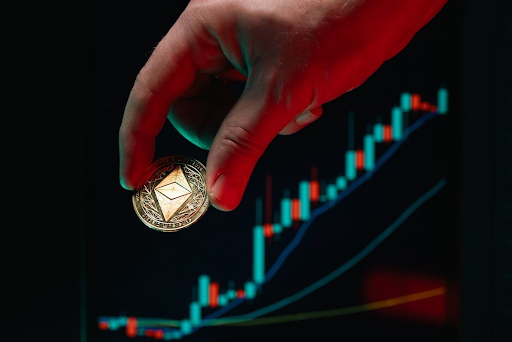
Crypto trading is getting more structured. Users are actively looking to trade, explore new strategies, and try something more than just holding. The shift is clear as people want control, more flexibility, and smarter ways to participate in volatile markets.
Crypto markets run on liquidity and trust, and with strong liquidity, spreads stay tighter, and trades execute more cleanly. But a rise in volatility triggers risk, especially in crypto trading, where leverage can magnify both P&L. That is exactly why many traders are choosing demo setups before getting into the real game.
In this post, I’ll explain why demo accounts are being preferred, what traders actually learn before going live, and how Delta Exchange fits into this.
Why Crypto F&O Feels Risky for First-Time Indian Traders?
Crypto trading might feel scary for beginners. In crypto F&O, even a small move against the position can hit liquidity.
For traders, market volatility is not the sole reason for mistakes. The risk often arises from execution errors. Things like picking the wrong leverage, entering without a stop-loss, or holding a losing trade too long, and more.
Platforms like Delta make it easier to access the derivatives market, but the smarter approach is to learn the mechanics before trading with real money.
How can Demo Trading Help New Crypto F&O Traders?
Demo trading is the best way to build real skills before putting in money. If you’re trying to move from basic crypto trading into derivatives, practice trading is really helpful.
- How to trade properly: It helps traders practice entries and exits, improve timing, and understand how position size changes the outcome.
- Order execution practice: Traders can become comfortable using market, limit, and stop orders without panic-clicking during real trading.
- Understanding leverage and margin: Demo trading shows how a small price move can swing P&L in crypto trading.
- Risk habits: Practice trading builds discipline around placing stop-losses, helps avoid revenge trades, and makes you stick to a plan.
- Confidence building: Helps traders learn the platform flow on an Indian crypto exchange like Delta Exchange, so the first live trade feels familiar.
Key Metrics to Track on Demo Before Starting Crypto Trading
Demo trading is not just for getting a feel of real trading. It’s for traders who track whether their approach is actually stable enough for actual trading.
- Win rate: A 70% win rate means nothing if the losses are huge, so many traders focus more on quality setups than on chasing wins.
- Average loss vs. average win: If the average win is bigger than the average loss, the strategy is worth repeating.
- Max drawdown: In Crypto F&O, MDD helps traders understand how much pain their strategy can realistically take.
- Risk-to-reward ratio: A clean 1:2 or 1:3 setup can outperform random entries over time.
Tracking these metrics helps traders build strategies rather than rely on luck.
Other Tools and Features on Delta Exchange
- Features
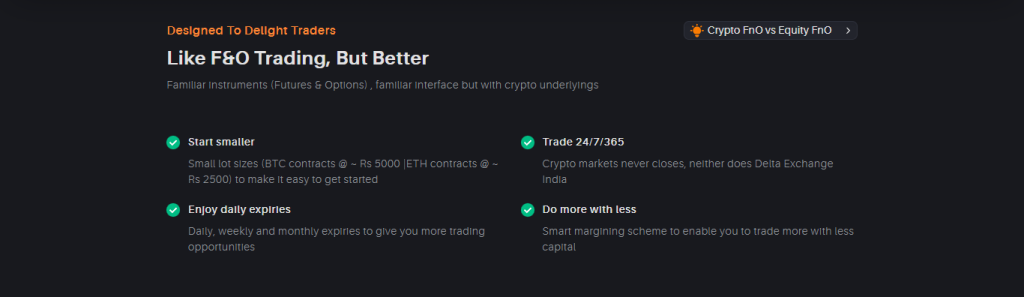
- Futures: Perpetual and expiry-based contracts on 70+ cryptocurrencies with up to 200x leverage.
- Options: Delta is the first platform to offer options trading on BTC, ETH, and other crypto assets.
- INR-based settlements: Use UPI, IMPS, or NEFT for bank deposits and withdrawals.
- Low-fee structure: Delta offers the lowest fees and an organized fee structure for crypto trading.
- Smaller lots: Easy to get started with BTC contracts at a minimum of Rs 5000 and ETH contracts at Rs 2500.
- Tools
- Basket orders: Placing multiple buy or sell orders in a single transaction.
- Strategy builder: Helps create, visualize, and analyze multi-leg strategies by adding them as a single transaction.
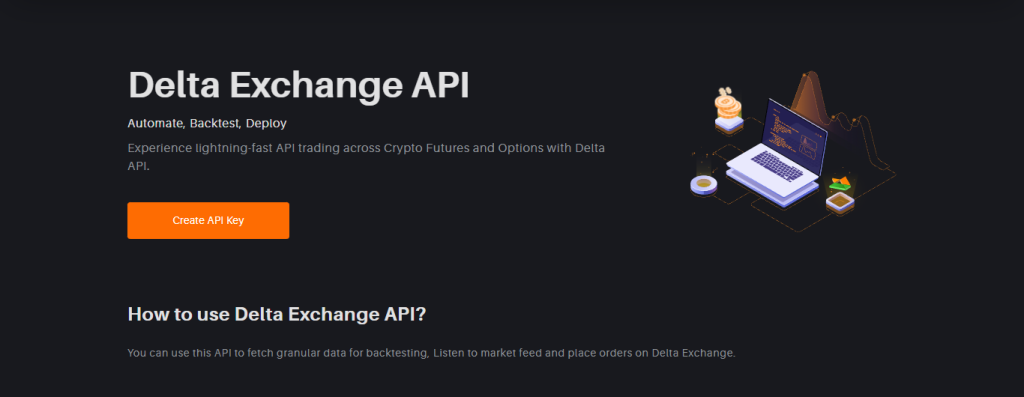
- API trading: Allows developers to execute trades by connecting custom scripts to their accounts.
- Trading Bots: Automated software that executes trades according to strategies without staring at the screen.
How to Start Trading Crypto F&O on Delta Exchange
Signing up for Delta is pretty simple; all you have to do is just
- Visit the Delta website.
- Sign up using your email, Google, or Apple ID.
- Use PAN, Aadhaar, and a selfie to complete your KYC verification.
- Add a bank account.
- Your account will be verified through a penny drop.
- Add money to your Delta wallet, and you’re good to go.
- It’s recommended to check the fee structure.
Note: Only bank accounts registered in the same name as the account holder are allowed for transactions.
Final Thoughts
Crypto rewards skill, and the traders who last are usually the ones who learn execution, risk control, and discipline. Demo trading gives you a way to understand order flow, position sizing, and how derivatives behave.
On an Indian crypto exchange like Delta, the tools are there, but the edge comes from using them the right way. Practice first, then trade crypto and derivatives with more clarity and a better idea.
For more information, visit us at www.delta.exchange or visit our X account for all the latest news and updates.
Disclaimer: Cryptocurrencies are highly volatile and contain risks. Kindly do your own research before investing in any digital currencies or crypto derivatives.
